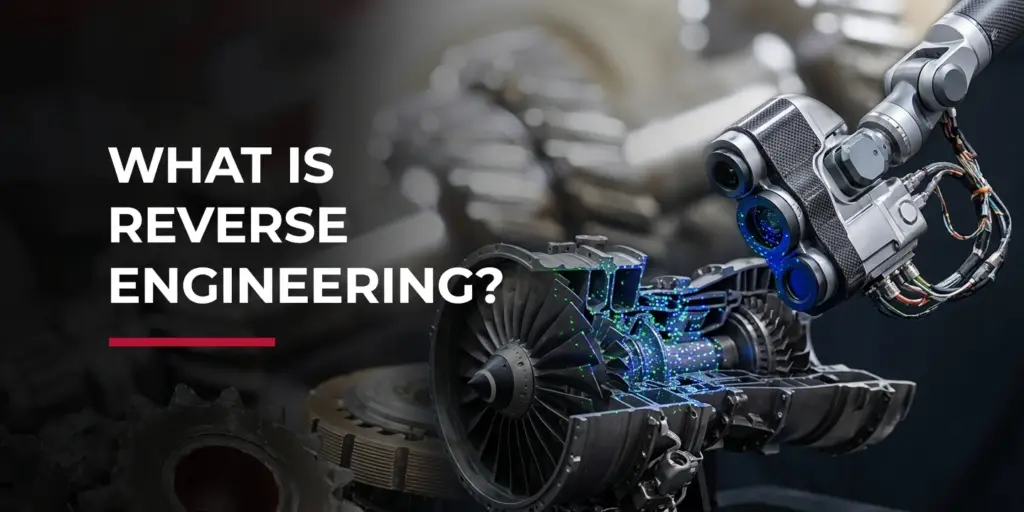
What is Reverse Engineering? Uncovering Secrets and Solutions
Every complex product you encounter — a smartphone, a car engine, a piece of software, a pharmaceutical compound — was built through a process of design, moving from concept to finished product. Reverse engineering runs this process backward: starting with a finished product and systematically working backward to understand how it was built, what it’s made of, and how it achieves its function.
Far from being a niche or obscure technical activity, reverse engineering is a foundational practice across nearly every engineering and technology discipline — used for innovation, competitive analysis, legacy system maintenance, security research, and education. This article explains what reverse engineering actually involves, the methods used across different fields, and why it remains one of the most practically valuable skills an engineer can develop.
Defining Reverse Engineering
Reverse engineering is the process of analysing a product, system, or piece of software to understand its components, functionality, and the design principles behind it — typically without access to the original design documentation. The goal is to deconstruct something that already exists in order to understand how it works, why it was designed that way, and what can be learned or improved from that understanding.
This stands in direct contrast to ‘forward engineering,’ which is the conventional design process of moving from requirements and specifications toward a finished product. Reverse engineering essentially inverts this flow — starting from the finished artefact and working backward toward an understanding of its underlying design.
Reverse engineering is a core practical skill taught across multiple departments at best engineering colleges in bangalore, because the ability to deconstruct and understand existing systems — whether mechanical, electrical, or software-based — is foundational to nearly every branch of modern engineering practice.
Why Reverse Engineering Matters
Reverse engineering serves several distinct and legitimate purposes across industry, each with its own motivations and methods.
Understanding Legacy Systems
Many organisations operate critical systems — industrial machinery, software applications, infrastructure components — for which the original design documentation has been lost, is incomplete, or belongs to a vendor who no longer provides support. Reverse engineering allows engineers to understand how these systems function well enough to maintain, repair, or safely replace them, even decades after their original creation.
Competitive Analysis and Benchmarking
Companies routinely reverse engineer competitor products to understand their design choices, manufacturing methods, component sourcing, and cost structures. This is a standard and legal practice in most jurisdictions (within the bounds of patent and intellectual property law) and is central to how companies benchmark their own products and identify opportunities for improvement or differentiation.
Compatibility and Interoperability
When manufacturers want to design products that work with existing systems — a replacement part that fits an existing machine, software that can read a proprietary file format, a peripheral that works with existing hardware — reverse engineering is often the only way to understand the specifications needed to achieve compatibility, particularly when the original specifications are not publicly documented.
Security Research and Vulnerability Assessment
In software and hardware security, reverse engineering is a fundamental tool used by security researchers to understand how systems work in order to identify vulnerabilities before malicious actors do. Ethical security researchers reverse engineer software and devices specifically to find and responsibly disclose weaknesses, strengthening overall system security. This defensive application is distinct from, and should never be confused with, malicious reverse engineering intended to exploit vulnerabilities for harmful purposes.
Computer science and engineering students at engineering colleges in bangalore who pursue cybersecurity specialisations typically study reverse engineering specifically within this ethical, defensive framework — learning to understand system vulnerabilities in order to build more secure systems, not to exploit them.
Education and Learning
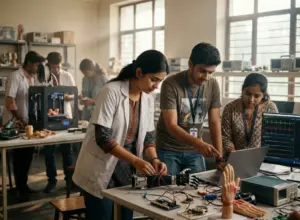
Taking apart an existing device or dissecting existing code to understand how it achieves its function is one of the most effective ways engineers and students learn design principles. Many engineering curricula incorporate reverse engineering exercises specifically because understanding how successful existing designs work builds intuition that purely theoretical study cannot replicate.
Reverse Engineering Methods Across Disciplines
Discipline | Typical Methods | Common Applications |
|---|
Mechanical Engineering | 3D scanning, CAD reconstruction, materials testing, disassembly | Replacement parts, legacy equipment maintenance, competitive product analysis |
Electrical Engineering | Circuit tracing, component identification, signal analysis | Understanding proprietary hardware, repair of obsolete electronics |
Software Engineering | Decompilation, disassembly, static and dynamic analysis | Legacy software maintenance, malware analysis, interoperability |
Chemical Engineering | Spectroscopy, chromatography, compositional analysis | Understanding material formulations, pharmaceutical analysis |
Civil Engineering | Structural analysis, materials testing, historical documentation review | Restoring or assessing older infrastructure without original plans |
The Reverse Engineering Process
While specific methods vary significantly by discipline, the general process follows a recognisable structure:
- Information gathering — collecting all available documentation, observations, and data about the product or system being studied
- Disassembly or decomposition — physically or logically breaking the system down into its component parts
- Analysis — studying each component to understand its function, specifications, and relationship to the overall system
- Documentation — recording findings in a form that can be used to recreate, repair, modify, or build upon the understanding gained
- Validation — testing conclusions against the original system’s known behaviour to verify accuracy of the reverse-engineered understanding
Reverse Engineering in Software: A Closer Look
Software reverse engineering deserves particular attention given its growing importance in cybersecurity, legacy system maintenance, and competitive technology analysis. The two primary approaches are:
Static Analysis
Static analysis examines software code or compiled binaries without executing them — studying the structure, logic, and components of the code as written. Tools like disassemblers convert compiled machine code back into a more human-readable assembly language representation, allowing analysts to study the program’s logic without running it.
Dynamic Analysis
Dynamic analysis involves running the software in a controlled, monitored environment and observing its behaviour in real time — tracking what resources it accesses, how it responds to different inputs, and what effects it produces. This approach is particularly valuable for understanding software behaviour that is difficult to infer from static code alone, such as runtime decision logic or interactions with external systems.
Software reverse engineering skills are increasingly valuable across the technology industry — not only in specialised cybersecurity roles but in general software engineering, where understanding undocumented legacy codebases is a routine professional challenge that strong computer science graduates are well-prepared to handle.https://newhorizoncollegeofengineering.in/
The Legal and Ethical Boundaries of Reverse Engineering
Reverse engineering exists within a legal and ethical framework that varies by jurisdiction and application. Understanding these boundaries is essential for anyone practising it professionally:
- Reverse engineering for interoperability (building compatible products) is generally legal in most jurisdictions, though specific protections vary
- Reverse engineering protected by patents may be restricted, depending on what aspects of the patented invention are examined and how findings are used
- Software licence agreements frequently include clauses prohibiting reverse engineering — though the enforceability of these clauses varies by jurisdiction and use case
- Security research reverse engineering is generally conducted under responsible disclosure frameworks that protect researchers while ensuring vulnerabilities are reported to vendors before public disclosure
- Reverse engineering for the purpose of circumventing security to enable piracy, unauthorised access, or malicious exploitation is illegal in most jurisdictions and ethically impermissible regardless of legal status
Professional engineers and researchers who engage in reverse engineering do so within clearly defined legal and ethical frameworks — understanding these boundaries is as important as the technical skill itself.
Engineering programmes at institutions such as best mca colleges in bangalore that incorporate reverse engineering into coursework do so with explicit attention to these ethical and legal frameworks, preparing students to apply the skill responsibly throughout their careers.
Why Reverse Engineering Is a Valuable Skill for Engineering Students
Beyond its direct professional applications, reverse engineering develops a cluster of capabilities that benefit engineers across every specialisation:
- Systems thinking — understanding how individual components combine to produce complex overall behaviour
- Diagnostic reasoning — the ability to infer underlying causes and design logic from observed effects and behaviour
- Attention to detail — successful reverse engineering requires careful, methodical observation and documentation
- Cross-disciplinary literacy — real-world products often combine mechanical, electrical, and software elements, requiring engineers to think across traditional discipline boundaries
Engineering students who gain hands-on reverse engineering experience — through coursework, projects, or competitions — consistently report that it deepens their understanding of design principles more effectively than theoretical study alone, because it forces direct engagement with how real, successful designs actually solve practical problems.
Key Takeaways
- Reverse engineering is the process of deconstructing an existing product or system to understand its design, components, and function
- It serves legitimate purposes across industries: legacy system maintenance, competitive analysis, interoperability, security research, and education
- Methods vary significantly by discipline — from 3D scanning and circuit tracing to software decompilation and chemical analysis
- Software reverse engineering relies on static analysis (studying code without running it) and dynamic analysis (observing behaviour during execution)
- Reverse engineering operates within defined legal and ethical boundaries that every engineer should understand before applying the skill professionally
Conclusion
Reverse engineering is one of engineering’s most practically valuable and widely applicable skills — a discipline that turns curiosity about how existing things work into a systematic, professional capability. Whether maintaining legacy infrastructure, strengthening cybersecurity, ensuring product compatibility, or simply learning design principles from successful existing products, the ability to deconstruct and understand complex systems is foundational to engineering practice across every specialisation. For students and professionals alike, it remains one of the most direct paths from observation to genuine technical understanding.
FAQs
- Is reverse engineering legal?
Generally yes, within certain boundaries. Reverse engineering for interoperability, education, security research, and legitimate competitive analysis is legal in most jurisdictions. However, specific restrictions apply depending on patent protections, software licence agreements, and the intended use of findings — reverse engineering to enable piracy or unauthorised access is illegal.
- What industries use reverse engineering the most?
Automotive, aerospace, electronics, software and cybersecurity, pharmaceuticals, and manufacturing are among the industries where reverse engineering is most extensively and routinely applied — for purposes ranging from legacy maintenance to competitive analysis to security research.
- What tools are used for reverse engineering?
Tools vary by discipline: 3D scanners and CAD software for mechanical components, oscilloscopes and circuit analysers for electronics, disassemblers and debuggers for software, and spectroscopy and chromatography equipment for chemical analysis.
- What is the difference between reverse engineering and forward engineering?
Forward engineering is the conventional design process, moving from requirements and specifications toward a finished product. Reverse engineering inverts this, starting with an existing finished product and working backward to understand the design principles and specifications behind it.
- Can reverse engineering be used maliciously?
The technique itself is neutral — it can be applied for legitimate purposes (security research, legacy maintenance, interoperability) or misused for malicious ones (piracy, unauthorised system access, circumventing security). Ethical and legal frameworks exist specifically to distinguish legitimate reverse engineering practice from malicious exploitation.
- Is reverse engineering taught in engineering degree programmes?
Yes, increasingly so. Many engineering curricula now incorporate reverse engineering exercises and coursework, recognising it as a practical skill that deepens design understanding and has significant professional application across mechanical, electrical, computer, and software engineering specialisations.
- What is the role of reverse engineering in cybersecurity?
Reverse engineering is fundamental to ethical security research — analysts reverse engineer software and hardware systems to identify vulnerabilities before malicious actors can exploit them, and to understand malware behaviour in order to develop effective defences against it.
- Do you need a specific engineering background to learn reverse engineering?
A foundation in the relevant discipline is helpful — mechanical engineering for physical products, computer science or software engineering for code, electrical engineering for circuits — but the core reverse engineering skills of systematic observation, decomposition, and analysis are broadly transferable across these backgrounds.